
Minister for Defence Readiness and Industry Luke Pollard MP's speech at ISPC 2026
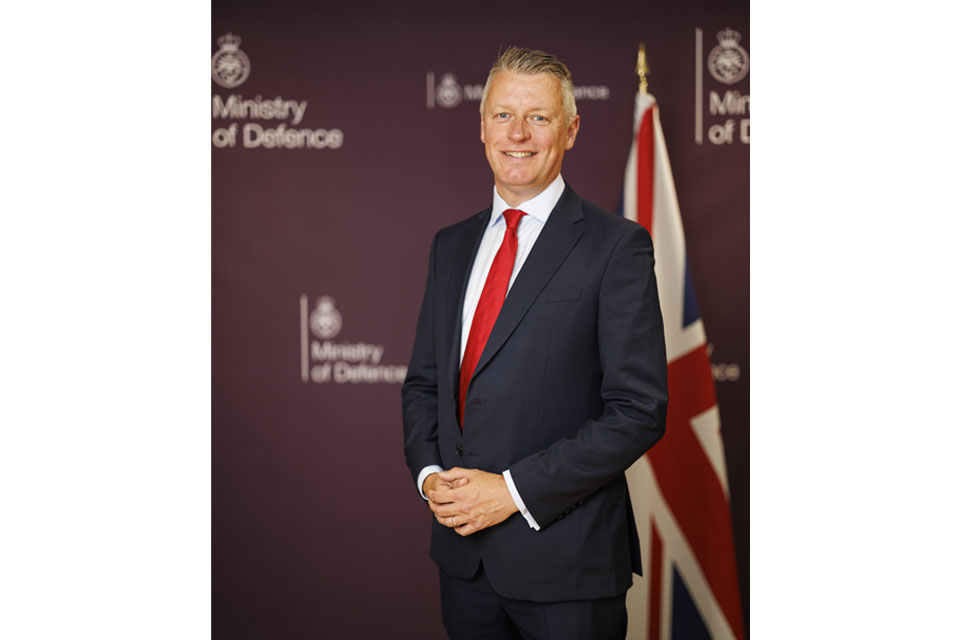
Minister Pollard highlighting the increasing importance of the Maritime industry in an era of intensifying strategic competition
It’s always disturbing as a politician when you see two superb speeches without any bits of paper. And then as a politician you walk to the podium with your paper and you realise that there’s the official at the back marking down if you change the word ever so slightly.
And so, I enjoyed the speeches both from Captain Ben and also Sir Gwyn. Thank you all for being here today and in particular can I thank our Norwegian friends for co-hosting this event today.
The UK-Norway relationship is stronger now than at any point in our collective history. We share common values of liberal democracy, pride in our steadfast support for Ukraine and a drive to modernise our armed forces so they are ready to fight the next war, not the last one.
From the Lunna House Agreement to our future combined Type 26 anti-submarine frigate fleet, our relationship is one of deep defence integration.
Today, Norway is not just an important ally, but an indispensable strategic partner. And I’d like to thank Sir Gwyn for bringing us together and setting the scene so well as he did.
The First Sea Lord’s vision of a hybrid navy is a powerful image. It weaves together formidable crew ships like the one we’re sat in today with innovative, autonomous solutions to create a powerful, integrated force. Look, I’m a son of a submariner. I’m proud to be Devonport’s Member of Parliament.
And it is for those reasons that when Gwyn set out the vision for a hybrid navy, I could see it working. Not that it was an option or an idea, but it is a necessity. As First has just laid out, to be ready we need first, best-in-class crewed ships, brilliant men and women in uniform. We need uncrewed assets, we need autonomous systems, we need good, strong allies and we need that system brought together. That is the vision that the Royal Navy is delivering today.
Now look, as well as being the Minister for Defence Readiness and Industry, I’m a proud Navy brat. That gives me a special thrill to be in a ship like this today, as looking around the numbers of naval uniforms will also give you, I’m sure, a thrill, a respect for what the capabilities of this platform are and the pride in the men and women who serve onboard her.
But when I was given this job as Defence Readiness and Industry, there was a question for me about why do we have readiness and industry together? Why aren’t they separate? And they’re together for a very important reason. Just as our friends in Ukraine are showing us, we cannot be ready if we don’t invest in industry. It is our industrial partners, our industry that sits behind our forces, that will be the determinant of whether we can stay in the fight, whether we can deter aggression, whether we can build the new capabilities.
And it’s for that reason that I’m proud to be both the readiness minister and the minister for our brilliant defence industry, which is increasingly working with our allies across the world, across NATO, in building new partnerships together, and in making the first Sea Lord’s vision of a hybrid navy reality.
We need to do more than just bridge our navies and maritime industries. We need to intertwine them as never before. The sailor and the supply chain network together from day one, connecting operational need with industrial delivery, building systems that can be adapted, upgraded and integrated quickly and those pieces have already started falling into place.
The Kraken K3 Scout that you see over there – small, uncrewed, formidable boats that patrol the UK coastline for extended periods without placing our sailors in danger – represents an early, practical example of defence and industry delivering the hybrid navy together.
When you see that boat there, this is not a theory or a concept, it is a reality. That is what the hybrid navy means to the Royal Navy today. And I can announce this morning that we have contracted Saab UK to integrate their new lightweight counter-drone radar systems into the K3 fleet, further protecting our naval assets, ports and critical infrastructures.
And then there’s the North Atlantic, on which so much of our trade, energy and prosperity rests. Imagine a web of advanced sensors, sonar and autonomous platforms that stretch across the Greenland-Iceland-UK gap. Powered by cutting edge AI that allows us to spot even the most well-hidden undersea threats. Helping our warships protect the vast network of underwater infrastructure that connects and powers our North Atlantic communications and energy networks. A surveillance service that gives the Royal Navy’s warships and submarines a comprehensive picture of the threats beneath the surface. This is Atlantic Net.
And I’m pleased to also announce that in parallel with the Atlantic Future Forum, we are signing a framework agreement with Southampton-based Ocean Infinity Solutions that opens the door to an initial £90 million investment. This investment will allow us to make Atlantic Net operational from next year.
It is the first of our new Atlantic Bastion capabilities. The Bastion programme. and the hybrid navy are delivering naval warfare tech revolution that will secure the North Atlantic against Russian threats, spanning autonomous surface and underwater vessels, cutting-edge digital infrastructure and world-class warships.
Atlantic Net shows what we can achieve when every part of our defence enterprise brings the best to the table. The team behind it blends industry, Navy, Commercial X, a new unit which we have set up to smash through the old rules and bad habits that have plagued maritime acquisition for far too long.
We have made industry a strategic partner, not just a supplier. And in doing so, we have harnessed their expertise in a way we have not done for a very long time.
By the time they’re done, Atlantic Net will not have gone just from a rough concept of game changing service, it will have done so in two years, around half the time it usually takes.
And by investing in British businesses and skilled jobs, most of its platforms and systems are going to be delivered by British small and medium-sized suppliers, with strengthening both our national security and our defence industrial base.
Atlantic Net and Atlantic Bastion, more broadly, will be a catalyst for new breakthroughs in autonomy, undersea sensors and more. And as we leverage the creativity of our amazing defence tech innovators in the UK and importantly from our NATO partners across Europe, there is even more to come.
Look, we live in a world that is both more connected and more contested than it has been in decades. Today, the strategic importance for European and NATO security of the North Atlantic, the High North and the Baltic can’t be overstated. The security of this region, of our region, depends on cooperation across European nations. As the First Sea Lord has just said, we must be ready to fight together.
The Joint Expeditionary Force is already a potent vanguard for NATO and for European security. Our ships sail together, our crews and ships companies work together, our industry is working together. Through Nordic Warden we track potential undersea threats and monitor the Russian shadow fleet together. And if we’re going to fight together we should be designing and delivering side by side too. Shared challenges need shared solutions.
Now the UK prides itself on being a capable, credible, trusted ally in Europe and around the world. But it’s not just enough to build world-class equipment. We must increasingly partner with our nations to bring the very best of both nations, of Alliance technologies, together.
And that’s why we need to forge new partnerships that go beyond our forces, to join up more of our industrial bases and supply chains across northern Europe. The JEF can be the engine that propels this integration forwards.
And we’ve seen how this can work. Norway’s acquisition of five Type 26 frigates alongside the eight Royal Navy Type 26s is creating a highly capable combined anti-submarine warfare fleet.
Our aspirations should be jet-wide supply chains that allow a British frigate to be repaired for Estonia, a Dutch warship to restock here in Norway – not just interoperable but interchangeable. An innovative, open-architecture approach with new technologies that provide our sovereign strengths, boost collective security and complements NATO operations.
Now our future security depends on far stronger collaboration between nations, militaries and industries. Through trusted partnerships, open systems and real collaboration, we can make northern Europe harder to threaten, faster to reinforce and better able to fight and win as members of JEF and NATO.
Now you’ve got some exciting sessions coming up today and as you listen to them, not just the challenges that the First Sea Lord has given, I want to add some as well.
What are the anchors that are holding us back from further integration and moving faster and how do we cut them loose? What are the stupid rules that are getting in the way that might have been acceptable for peacetime but are not acceptable for a period of contest? How can we align requirements more, create new efficiencies and integrate to share and adapt our capabilities faster than we ever have before?
Now the answers to these questions will dictate how well our countries, how well JEF and NATO can deter threats, protect our peoples and our seas tomorrow and for the years to come. Threats are increasing, collaboration is growing stronger. Keep going with what you’re doing. And I’m now going to take some difficult questions from the floor.
Thanks very much.
From: Ministry of Defence and Luke Pollard MP