
Minister McGovern's social care speech at the NCASC conference
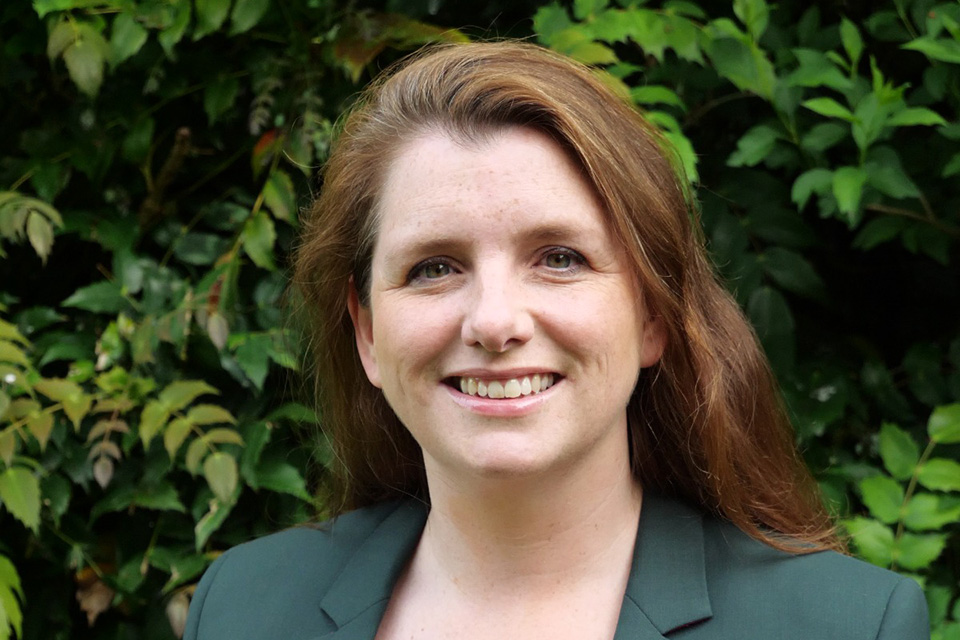
Minister McGovern delivered the keynote speech at the National Children's and Adult's Social Services conference in Liverpool
Good afternoon, conference.
It is an honour and a pleasure to be with you all.
And for everyone who cares about adult social care, it really has been quite the year.
To be here in Liverpool, my home city, with a scouser in number 10, I’ve waited 50 years to be able to say that, and a clear instruction to build a National Care Service, it feels like quite the change.
Now, I spent 14 years in opposition as a Member of Parliament just over the water in the Wirral.
It has been a frustrating journey trying to make progress on adult social care and I held my first public meeting on it for my constituents 16 years ago.
But with austerity, Brexit and then Covid, there was always something else at the top of the political agenda.
Now, whether it’s because it’s a job done 80% by working-class women, or because the struggles faced by families are too hard to talk about after the fact. Adult social care has never been top of the political tree.
But it is now.
And I want to start with what we know.
You all know that our population is ageing. You see it in your communities every single day.
You see the older lady still in the home she brought her children up in, but no longer able to manage the stairs.
You see the carers and the social care workers doing their best despite their frustration with the NHS and the community groups that offer them a lifeline.
You know what it looks like when older people are part of our community, sharing life with grandchildren and even great-grandchildren.
By 2050, 18 million people will be 65 and over and the number aged 75 and over will rise to more than 10 million.
And the number aged 85 and over will have doubled.
The Office for Budget Responsibility told us this year that they forecast health spending as a share of national income to increase by roughly a percentage point each decade, so that by 2075 we would be spending 13% of GDP on health.
This rising demand presents us as a country with a fundamental choice.
Does this spending happen in an unmanaged way that makes the NHS more fragile and continues to threaten local authority financial sustainability?
Or do we take a different path, offering better care, particularly for older people, making sure our model of health and social care is financially sustainable.
Right now, councils are struggling under the weight of 15 years, during which the issue of social care has largely been ignored.
They have borne the cost of demographic shift and an older, sicker population.
As local government minister until July, I saw what this has meant.
Nearly a fifth of English councils have had to resort to costly, exceptional financial support in the past five years, with 36 doing so this year.
Now adult social care is not the trigger for all of these councils, but the lack of a change plan has been an underlying challenge for almost all local authorities.
And the problem won’t just be for councils.
In 2024, the OBR set out their analysis of the direction of travel for age-related spending.
They said that a population with worse health sees the overall budget deficit rising over years to come, whereas a population with better health helps that budget gap fall even whilst pension and age-related spending rises.
And this is a crucial model for us to focus on.
How can we change healthcare as the population ages so that we can improve quality of life and take steps to underpin stable public finances too?
The answer to this question is to build the National Care Service, working as one with the NHS, securing for older people a better quality of life and for all of us, sustainable public finances.
Now of course there are lots of questions about care for working-age adults too, and children’s care too.
But at this moment, when the care of older loved ones has been neglected for so long, and given all that we’ve heard from the Covid inquiry, I want to focus today on care for older people.
Now it’s easy to imagine what the care service looks like in practice because many of you are already doing it.
Take Walsall, where they redesigned how its existing Better Care Fund resources were used.
Money was moved into rehabilitation with one team between the NHS and local authority staff.
The number of people with no criteria to reside, in other words people with a delayed hospital discharge, fell 26% between September 2022 and September 2026.
In the words of one person, after leaving hospital, I was scared and thought I would never walk again.
The team came into my home, reassured me and were supportive. I was bed bound, but I can now walk with two sticks and I have my life back.
Now think about what that looks like nationally.
The average A&E wait for a frail person is currently 566 minutes.
Conference, that is nine and a half hours.
Around 4% of the population, the old and frail, account for 70% of hospital bed days when it’s not planned care.
They make up a larger share of unacceptable corridor care and of patients stuck in hospital when they do not need to be there.
We have to care for older people better or they will continue to end up in hospital where they do not want to be.
And that’s why there is such a strong case for local authorities to commission social care on so-called neighbourhood footprints.
This is a vision for health and care in which care is provided by a small team of care workers that you know well, with friendly and familiar faces.
They become experts on all things you.
Contact time is maximised and you don’t feel they are rushing out to their next call. And above all, the connection between homecare and other services like the NHS is seamless.
Everyone knows who’s looking after you and what’s happening.
A really important part of this vision is getting homecare right.
Now, neighbourhood health is often understood through the lens of general practice, community nursing and NHS services.
But if the objective is to keep people well, independent, and supported in their own homes, social care is not an optional addition to that model.
It is fundamental to making it work.
Consider what happens when an older person starts to struggle at home.
They may need help getting washed and dressed.
They may be struggling to eat properly or take medication.
They may be becoming increasingly isolated, and they may be experiencing a deterioration of mobility whilst their family carer might be at a breaking point.
These are not neatly separable health and social care problems.
They are interconnected aspects of a person’s life, and this is where neighbourhood health and care should make a massive difference.
It will mean better continuity as care workers build relationships and get to know what is normal for the people they support.
It will mean stronger local relationships. More locally organised care makes it easier to connect homecare providers with local GPs, community nurses, social workers and voluntary organisations.
And it will improve accountability as it becomes easier to understand who is responsible for supporting people in a specific neighbourhood.
Now, the Prime Minister has already announced that we will be implementing free personal care for older people paid for by reforming the triple lock.
And today, as a further step, I want to see more local authorities commissioning homecare on a neighbourhood basis.
Over time, I want to see all local authorities doing so. Last year, we published our first local authorities priorities document.
We said that we wanted to update this document every year.
This year’s paper will say more about what our plans could look like in practice and we’ll continue to design that approach with you.
We have also been working with many of you in recent weeks to design a range of models that will support places to make this shift, and we’ll continue to work with you on those and I’m planning to publish those materials early next year.
This will be a very different way of doing things and I recognise that we are asking everybody to break habits that have been long in the making.
But we will work with you as a government and support you to meet that challenge.
I know many of you will recognise some of the fundamental problems with homecare provision and many of you are already changing the way you organise yourselves and care to meet the challenge you see for the older population.
For councils, instead of buying individual visits from many providers spread across a large area, we know that a better way can be organising care around smaller neighbourhoods with one or two main providers responsible for their area with alignment between health and care neighbourhoods.
For providers, it means working within a defined neighbourhood, planning sensible routes, predictable hours and investing in training and properly accounting for travel time.
Now, let’s take an area like Bristol, where the Homecare Association’s modelling shows how much could be gained from this neighbourhood homecare commissioning.
Their modelling showed that rather than having several providers serving overlapping parts of the city, organising those same care visits into geographical places, you could reduce the number of providers criss-crossing the city.
They found that the same care could potentially be delivered with 35% less workforce time capacity and 65% less mileage.
More time spent caring, less time spent driving.
The point is not to reduce the workforce.
The point is to use the skills and commitment of that fantastic workforce better.
Because social care workers deserve professional respect in their own right. They will often be the people who see a frail older person the most often. They will know them best and be the first to spot when something is wrong.
When it comes to dementia care, developing their skilled insights into how we can help people with dementia live well is mission critical in our plan to radically improve dementia care.
Now, let me paint you a picture of the difference we can make if we get this right, particularly on neighbourhoods.
Social care staff paid for a fair day’s work on full shifts with good schedules.
For care workers, better, more stable jobs and less time spent travelling.
For people who depend on care, fewer rushed visits, better continuity of care and earlier support from health to reduce hospital stays.
Now this comes after the Prime Minister has announced this week an extra £40 million for GPs, using the great expertise that we have in general practice to support people who may end up in emergency departments to keep them at home.
But social care is an absolutely vital piece of that puzzle.
Using our neighbourhood health and care teams together means helping people be healthier for much longer, making sure they’re on the right medication, whatever that person’s family doctor think is going to help.
We want to create neighbourhood health and care teams across GPs, community nurses and social care, and all the relevant specialist teams connected by data and funding in pursuit of better care for frail older people.
This neighbourhood approach is the first step in creating the National Care Service, doing what we can now between the NHS and councils to create more proactive, planned and preventative care.
And whilst Baroness Casey looks at what more needs to change for the years to come. This is change that we can make now.
Now you’ve heard from Jim Mackey, our NHS Chief Executive, and he is just as committed to this vision as I am.
But I know it will be easier said than done and we have a lot to work through together to make this vision a reality.
But if you take anything from what I’ve said today, it’s that the government is with you.
We understand the pressure you’re under and how hard you’re working.
And we together are going to stare this problem straight in the face and build the National Care Service together with neighbourhood health and care as a vital step along the way.
The prize is great.
Better use of our financial resources in pursuit of a better life for people when they most deserve it.
Now I want to finish where I began.
Over the River Mersey just behind, in the Wirral, if you look out from the conference centre, you can see it right there.
That’s where I’m from and have represented through seven prime ministers, 16 years and across five general elections.
And despite adult social care not being at the top of the political tree throughout that time, there have been moments that I will never forget.
The lady at the door in 2010 who first told me that her care worker didn’t even get paid for travel time.
The days when my constituency office staff rang care home after care home during Covid to try to get them PPE because care staff were looking after the dying wearing bin bags.
And most of all, the voice on the end of the phone when I rang the palliative care phone line in the Wirral to get help for my own mum just before she died of cancer in July.
My home, my family and my constituents and the people I love most have taught me that we can care for people better.
If we get care right, we don’t just help the public purse, we can take away the mental strain families experience when they should be enjoying precious moments and making precious memories.
This is the opportunity we have now, thanks to the leadership of the Prime Minister and the leadership of every social care worker who has never let him or me forget what they are capable of.
I thank you in advance for all the work we’re going to do together and look forward to the change we’re going to build.
From: Department of Health and Social Care and Alison McGovern MP